Veritas et Virtus
Welcome to Veritas et Virtus, the Columbus Classical Academy blog.
Here we will share news and reflections on classical education.
-
On Why Classical Education is Good for Every Student
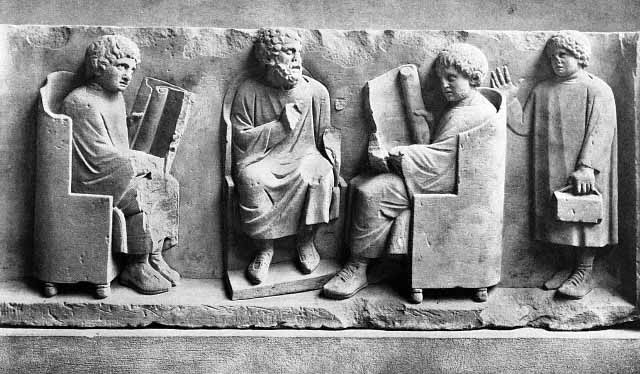
Are you inclined to think that the “life of the mind” is for scholars and savants? Have a nagging suspicion that classical education is for the leisure class and the literati, but not for the ordinary, American citizen? Nothing could be further from the truth.
Nearly a decade ago, Scott …
· 1 min read· Daniel C. GibsonOn the Foundations of Self-Government
View children as “little angels?” Believe they are naturally good, needing only to be encouraged to grow? This is the false foundation of progressive education—and it has profound implications for self-government.
Thinkers like Rousseau, Froebel, and Dewey changed the course of education in the West, introducing terms like “kindergarten …
· 1 min read· Daniel C. GibsonOn the Peculiar Importance of Teaching “Useless” Knowledge
Think that a classical education imparts a great deal of knowledge that is neither useful nor practical? Believe that it often consists of subjects that are neither relevant to present concerns nor designed to accomplish tangible results? This view is not entirely mistaken—but as Roger Scruton observed, a lofty …
· 1 min read· Daniel C. GibsonOn the Liberating Constraints of Truth and Virtue
Have you noticed that schools often have a mission to equip students to change or even to remake the world? That they view liberty as simply the state of being unfettered, so that all constraints must be abolished in order for man to be truly free?
Chesterton recognized that this …
· 1 min read· Daniel C. GibsonOn the Place of the Political and the Transcendent in Education
Are you exhausted by the partisan rancor that has engulfed our schools? Do you resent the incessant indoctrination going on in classrooms and wonder what can be done? It begins with recognizing the difference between the symptoms and the disease.
While it is no secret that K-12 education in America …
· 1 min read· Daniel C. GibsonOn the Enduring Importance of Humble Virtue
Do claims of “virtue” come off as insolent and provocative? Do those who talk about virtue seem like self-righteous prudes?
The impression is not entirely unearned. Often those who invoke the moral law take on an air of superiority rather than the introspection that self-awareness demands. In our hypocrisy, we …
· 1 min read· Daniel C. GibsonNew Year, Old Truths: An Invitation from Columbus Classical Academy
Have you ever asked the question, “What philosophy does my child’s school teach?” If not, perhaps this New Year is the perfect occasion to do so. Perhaps, upon reflection, you will conclude that now is the right time to discover anew the old truths that are the foundations of …
· 4 min read· Daniel C. GibsonOn the Importance of Struggle in a Good Education
Shouldn’t school be fun? Don’t children do better when they are having a good time? Why must an excellent education be difficult? Despite appearances, these are questions of ends, not means—of purpose, not pedagogy.
Struggle is an inherent part of classical education, not gratuitously but teleologically. Students …
· 1 min read· Daniel C. Gibson