
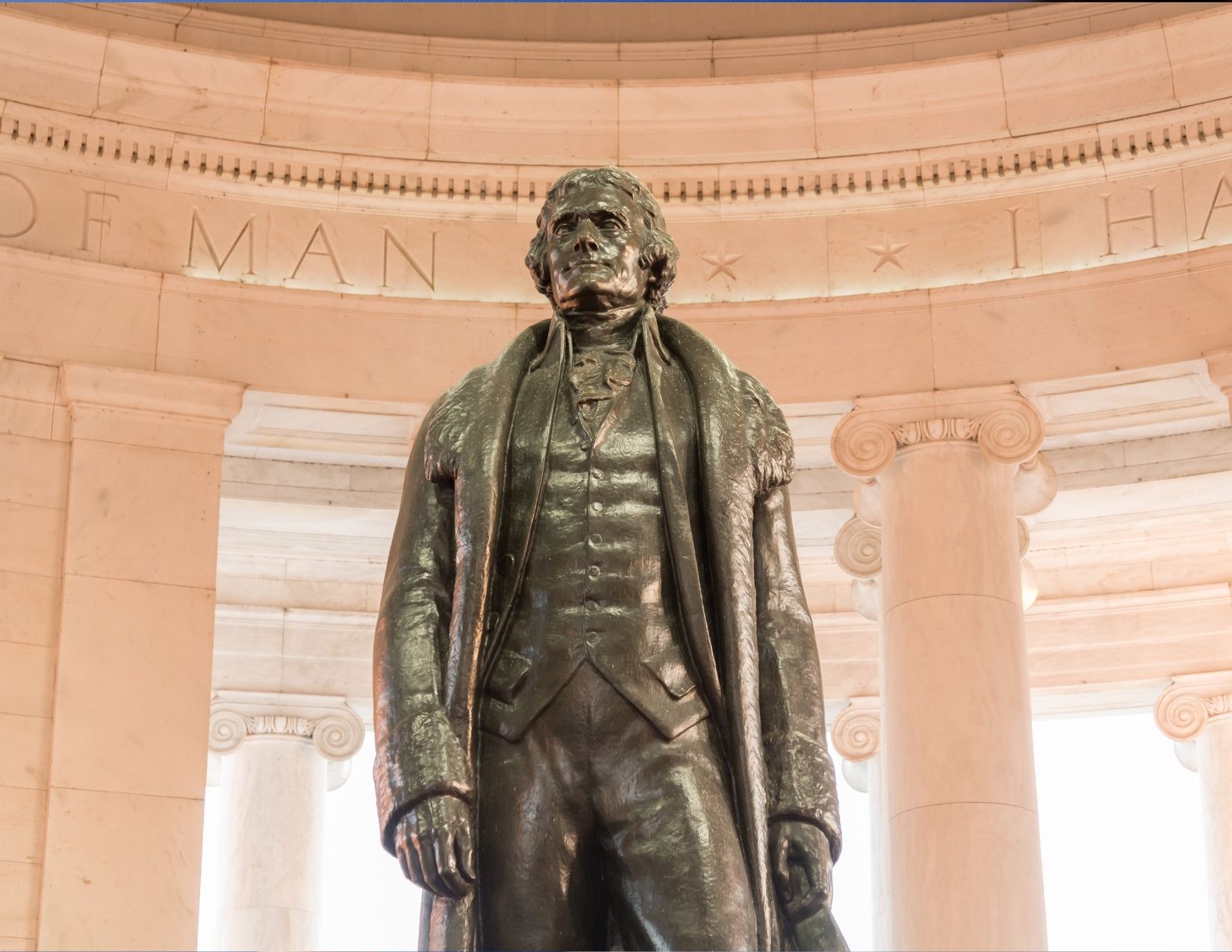
Yesterday we noted that the animal and the criminal are crouched and crooked, while the upright man is tall and straight. But these are just metaphors. How do we put it into practice?
Thomas Jefferson, in a letter to Peter Carr in 1785, encouraged Peter to pursue an upright life marked by honor and integrity. He wrote:
“[N]othing will be necessary to place you in the highest points of view but to pursue the interests of your country, the interests of your friends, and your own interests also with the purest integrity, the most chaste honour. The defect of these virtues can never be made up by all the other acquirements of body and mind. Make these then your first object. Give up money, give up fame, give up science, give the earth itself and all it contains rather than do an immoral act. And never suppose that in any possible situation or under any circumstances that it is best for you to do a dishonourable thing however slightly so it may appear to you.”
And then Jefferson concludes his exhortation with a test that Peter can use to assess whether he was doing the right thing: “Whenever you are to do a thing tho’ it can never be known but to yourself, ask yourself how you would act were all the world looking at you, and act accordingly.”
Now, don’t mistake Jefferson’s test for the idea that the world gets to decide what is right and wrong. No, Jefferson’s test serves merely as a means of examining our own conscience—would we be ashamed for the world to watch us?
Criminals and animals are crouched, in part because they desire not to be seen. The upright man, standing tall and straight, knows he will be visible to everyone. In the words of Thomas Jefferson, “act accordingly.”