
The word difficulty comes from the Latin difficilis, which is a combination of the prefix “dis” meaning “not,” and facilis, which means “easy.” And facilis comes from the Latin verb facere, meaning “to make” or “to do.” So, a difficulty, properly understood, is not merely an unpleasant circumstance—it assumes action; it is something that is not easy for us to do.
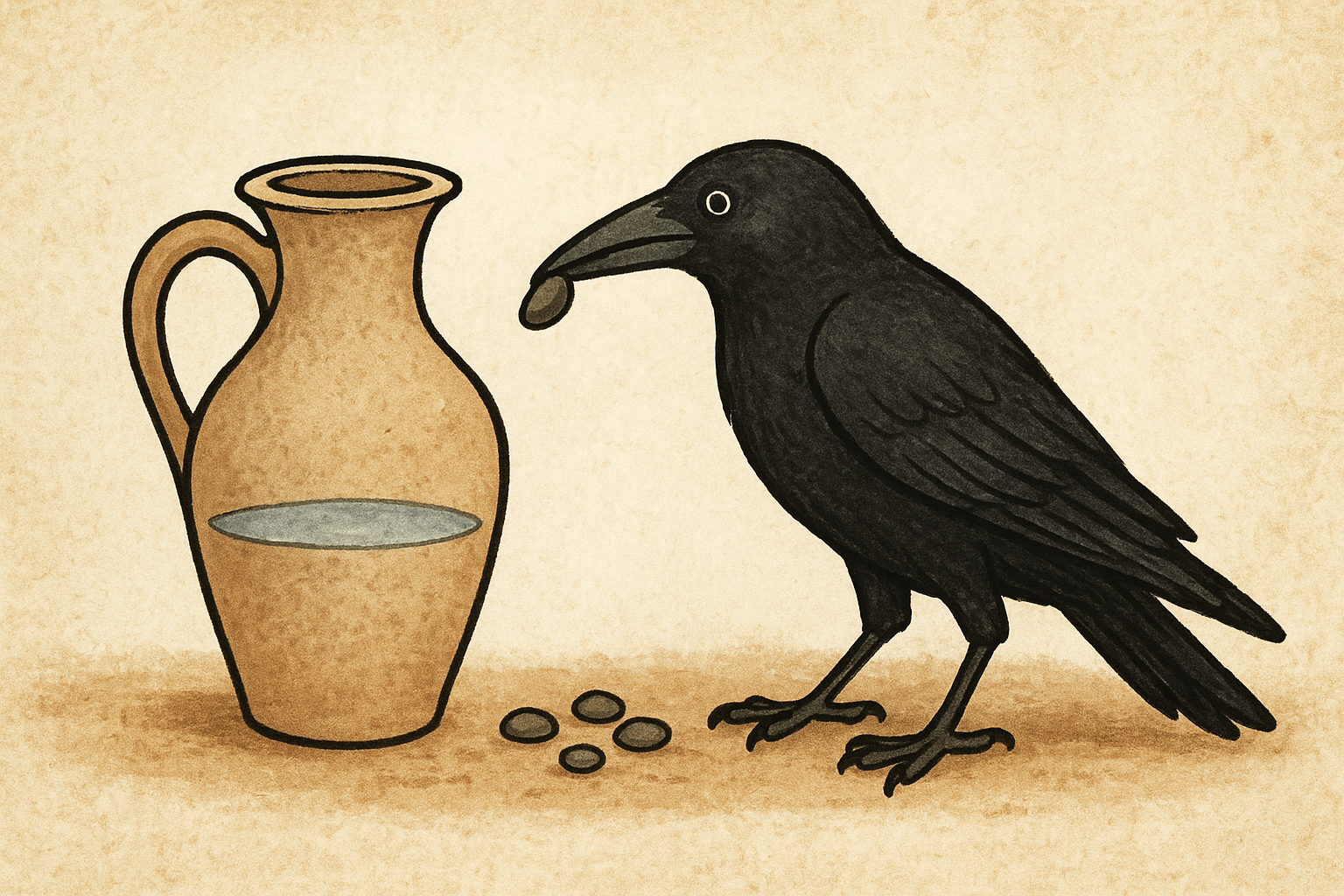
Aesop tells the fable of the thirsty Crow, who “[i]n a spell of dry weather, when the Birds could find very little to drink, found a pitcher with a little water in it. But the pitcher was high and had a narrow neck, and no matter how he tried, the Crow could not reach the water. The poor thing felt as if he must die of thirst.
Then an idea came to him. Picking up some small pebbles, he dropped them into the pitcher one by one. With each pebble the water rose a little higher until at last it was near enough so he could drink.”
Getting water from the pitcher was difficult—it was not easy to do. The Crow could have removed the difficulty by not even trying to get the water. He could have sat by the pitcher and whined about it; he could have done nothing and simply hoped for some help or wished that he might come upon another source of water; he could have kicked over the pitcher in a fit of frustration, spilled the water on the ground, and removed the difficulty…but with it any opportunity to drink.
Instead, he used his mind—he thought about it, and “an idea came to him” that allowed him to overcome the difficulty rather than remove it. We will not be joyful in the face of difficulty if all we do is hope for the difficulty to be removed—indeed, that can be accomplished by simply giving up, by doing nothing. Rather, try thinking and acting—it won’t be easy, but when it comes to overcoming difficulty, that’s the whole point.