
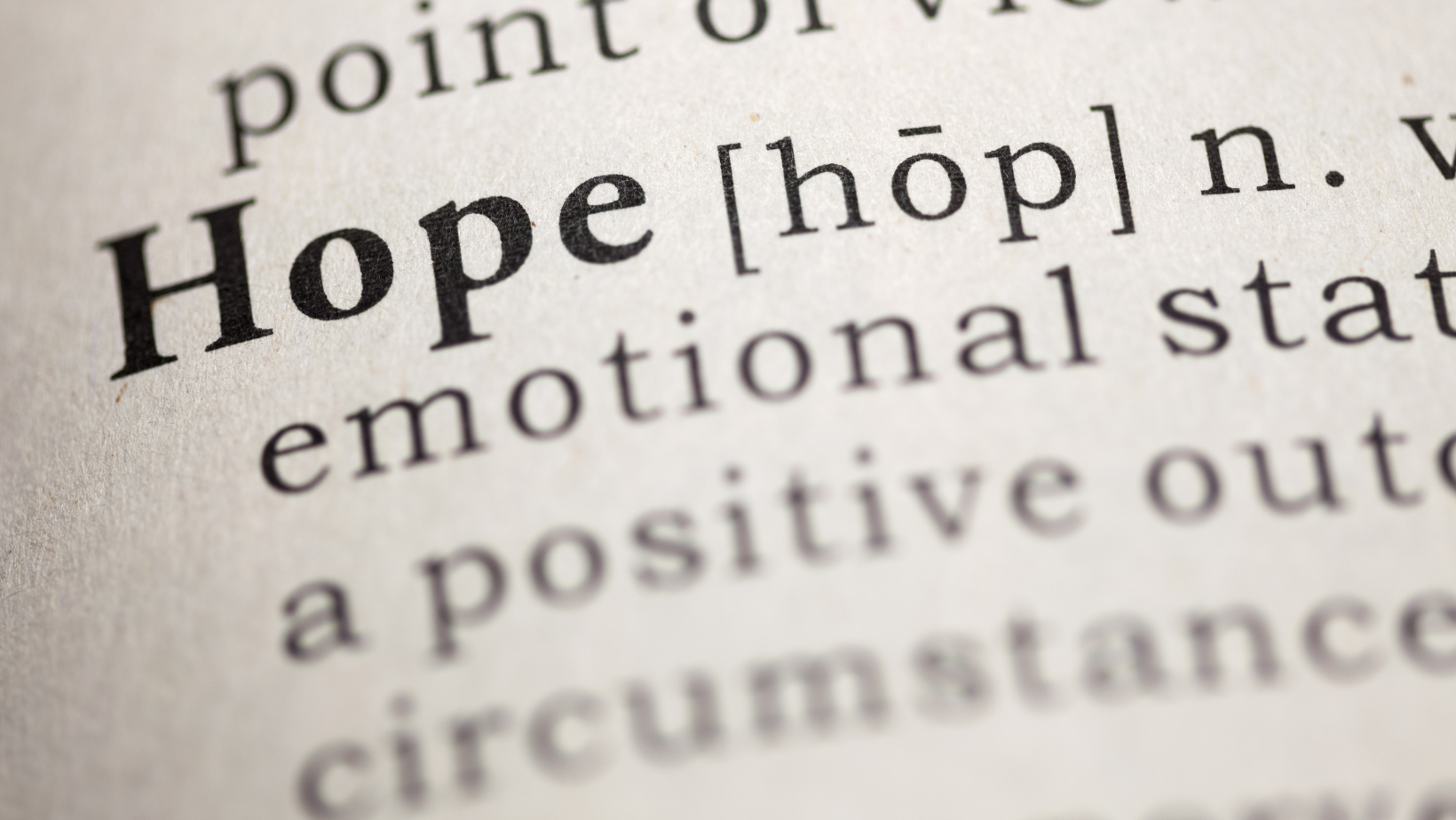
Usually, when people call us stubborn or describe what we believe as ridiculous, that’s not a compliment. But when it comes to the virtue of Hope, let me encourage you to be both.
In fact, our friend G.K Chesterton said that “Hope means hoping when things are hopeless, or it is no virtue at all.” What could he possibly mean?
Well, think of the story of Abraham and Isaac—God tells Abraham that he and his 90-year-old wife will have a son and that his offspring will be as numerous as the stars…and then after he gave them a son, told Abraham to go sacrifice Isaac on Mount Moriah. And Abraham believes God and obeys.
Or think of the story of Shadrach, Meshach, and Abednego—King Nebuchadnezzar orders them to worship the golden image or be thrown into the fiery furnace. And their response? They refuse to bow down, saying “Our God…is able to deliver us from the burning fiery furnace, and he will deliver us out of your hand…”—and even if He does not, we still won’t bow down.
Or think of the American slaves, who would sing songs of freedom and rescue, like Swing Low, Sweet Chariot, all while picking cotton for their cruel masters with no reason to think they would ever see freedom.
You see, real Hope is not just confident expectation in the future—it is what Paul calls “hope against hope.” That means continuing to have confidence when the world looks at your circumstances and tells you it is impossible. And it means acting on that confidence, even when the world might call you an obstinate fool.
When it comes to what you really hope for, I wonder: Can anyone fairly accuse you of that? I hope so.
And have a wonderful day.