
Welcome back. Whether you traveled, or stayed home, I hope you all had a restful and restorative break. Last week, our family spent time in a small town in Florida, called Rosemary Beach. It is in some ways a quaint and quiet, picturesque little town on the Gulf coast; though in other ways it turned out to be rather busy, even congested at times, and far more commercial than I expected. Some days I thought it was destined for the fate of the restaurant in New York City about which Yankees catcher Yogi Berra famously said, “Nobody goes there anymore. It’s too crowded.”
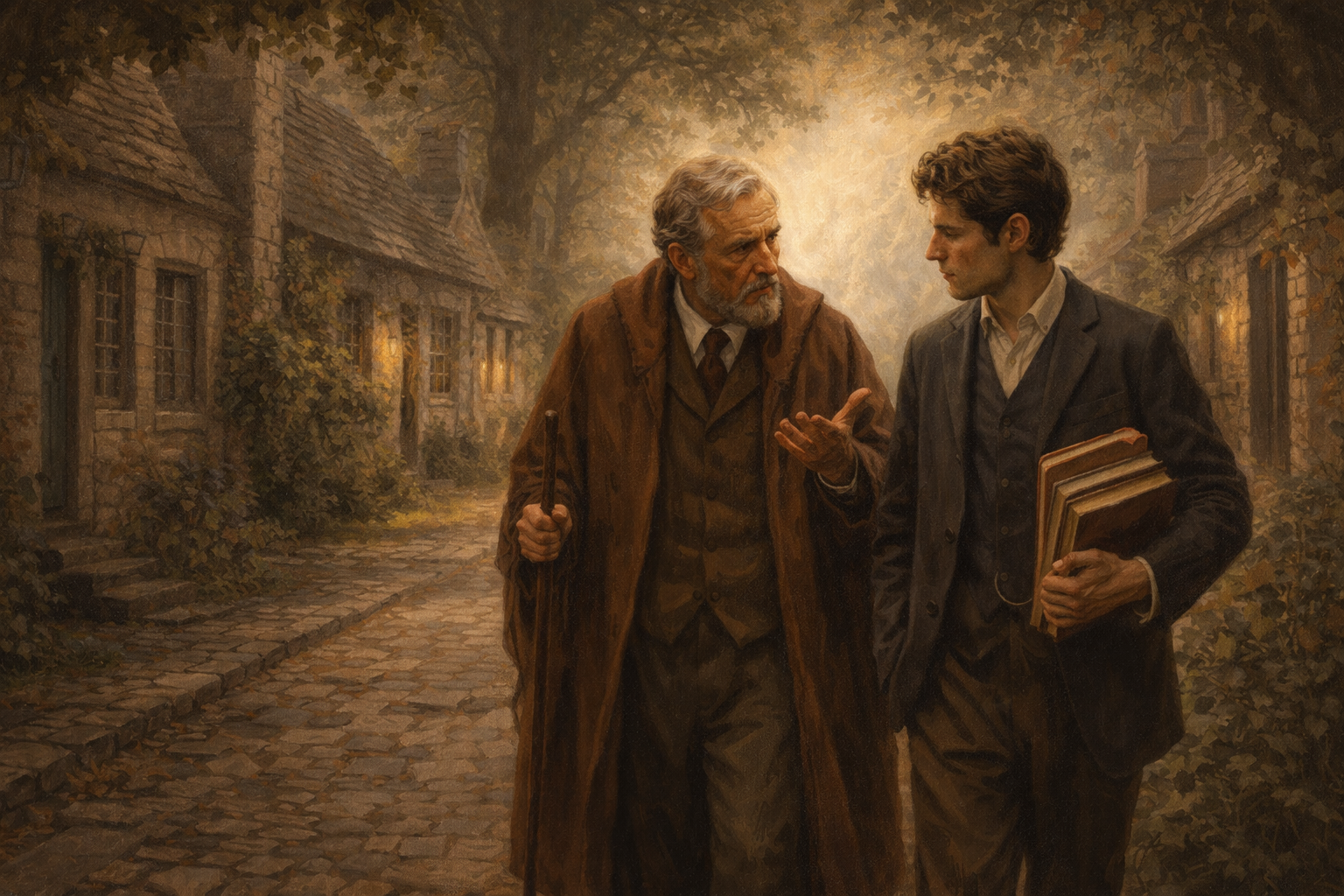
In any event, Rosemary Beach wasn’t quite what I was expecting. But while I was there, I got to reading a biography of C.S. Lewis, whom you know I quote rather often. In the book, the author tells the story of Lewis’s first interaction with one of his early teachers, William Thompson Kirkpatrick. As the two walked from the train station to the home of Kirkpatrick in Surrey, England where Lewis would be tutored:
“Lewis remarked causally, as a way of breaking the conversational ice, that the scenery in Surrey was somewhat wilder than he had anticipated.
Lewis had intended merely to begin a conversation; Kirkpatrick seized the opportunity to begin an aggressive interactive discussion demonstrating the virtues of the Socratic method. Kirkpatrick demanded that he stop immediately. What did Lewis mean by ‘wildness’ and what grounds had he for not expecting it? Had he studied some maps of the area? Had he read some books about it? Had he seen photographs of the landscape? Lewis conceded he had done none of these things. His views were not based on anything. Kirkpatrick duly informed him that he had no right to have any opinion on this matter.”
* * *
Lewis quickly realized that he was being forced to develop his critical thinking, based on evidence and reason rather than his personal intuitions.”
Reading this, two thoughts came to my mind: First, I had no right to have any opinion about Rosemary Beach, either. Like Lewis, I had formed expectations based on little or no actual knowledge of the place. And second, Lewis wasn’t just born a brilliant thinker—he had to be taught how to think well by his teachers. And part of that was being told when he had no right to have an opinion.
I wonder—what opinions do you have that are grounded on little more than your own intuition? And would you be offended or grateful if one of your teachers informed you that you have no right to have an opinion on the matter?
Think about it…and have a wonderful day.