
Welcome back – I hope everyone had a nice, long weekend.
Next week, each morning I’m going to ask you to think about virtue—and specifically the seven classical virtues that we have posted around the school. What are they, where did they come from, why do we have them, etc.
But for the remainder of this week, we’ll hear a few of Aesop’s fables, which are generally stories intended to teach moral and practical lessons for life. Each one has a short summary of the lesson that we’re supposed to learn from it—but instead of telling you what it is, I encourage you to consider what you think the lesson of the fable might be, and then I’ll share what the fable says the next day.
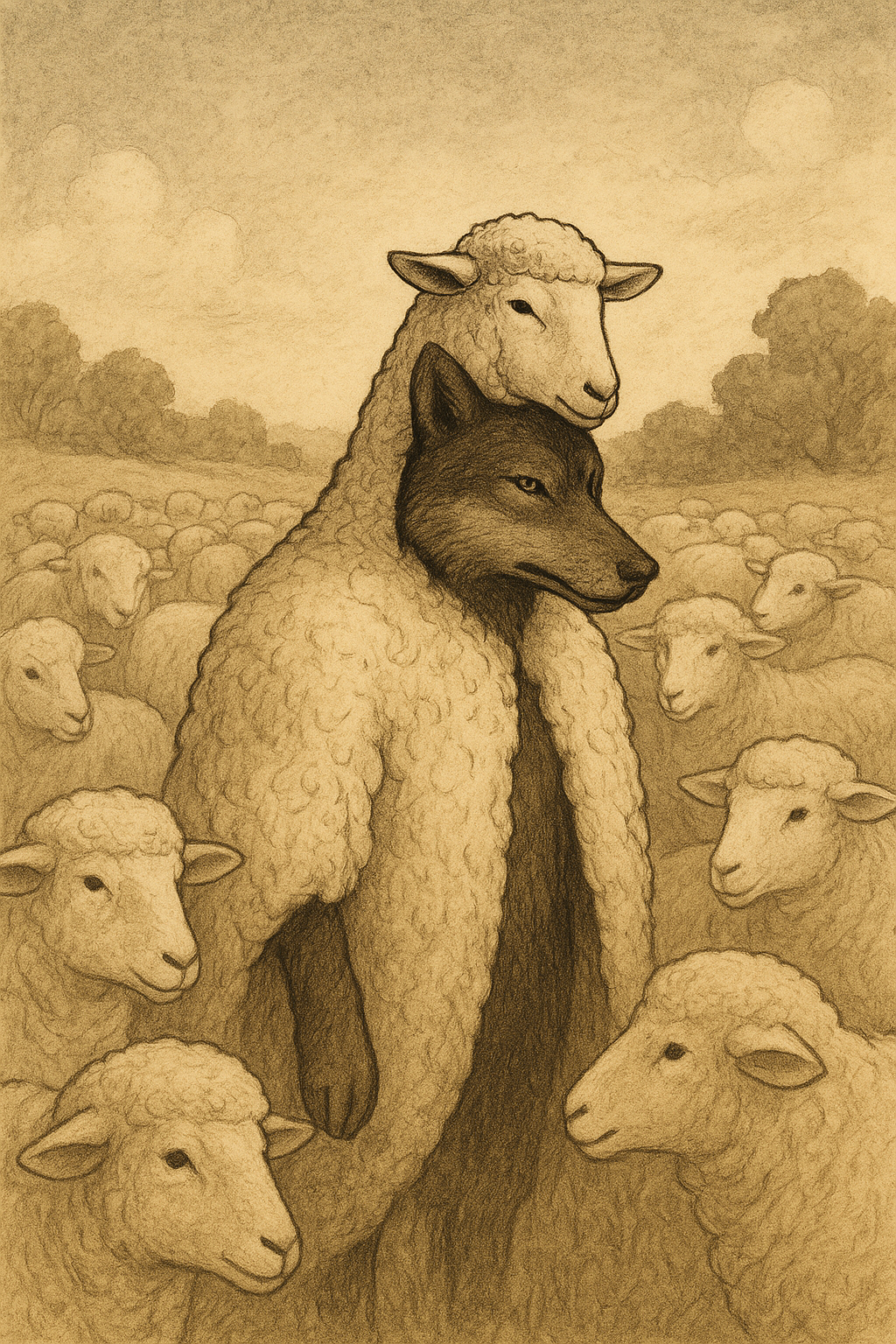
Our first fable is that of the Wolf in Sheep’s Clothing:
“A certain Wolf could not get enough to eat because of the watchfulness of the Shepherds. But one night he found a sheep skin that had been cast aside and forgotten. The next day, dressed in the skin, the Wolf strolled into the pasture with the Sheep. Soon a little Lamb was following him about and was quickly led away to slaughter.
That evening the Wolf entered the fold with the flock. But it happened that the Shepherd took a fancy for mutton broth that very evening, and, picking up a knife, went to the fold. There the first he laid hands on and killed was the Wolf.”
And just to keep your minds sharp, we’ll continue with the riddles for another week as well. Here’s today’s:
Two fathers and their two sons go on a fishing trip together. Each one catches a single fish to take home with them. They don’t lose any fish, and yet when they get home they, only have three fish. How is this possible?