
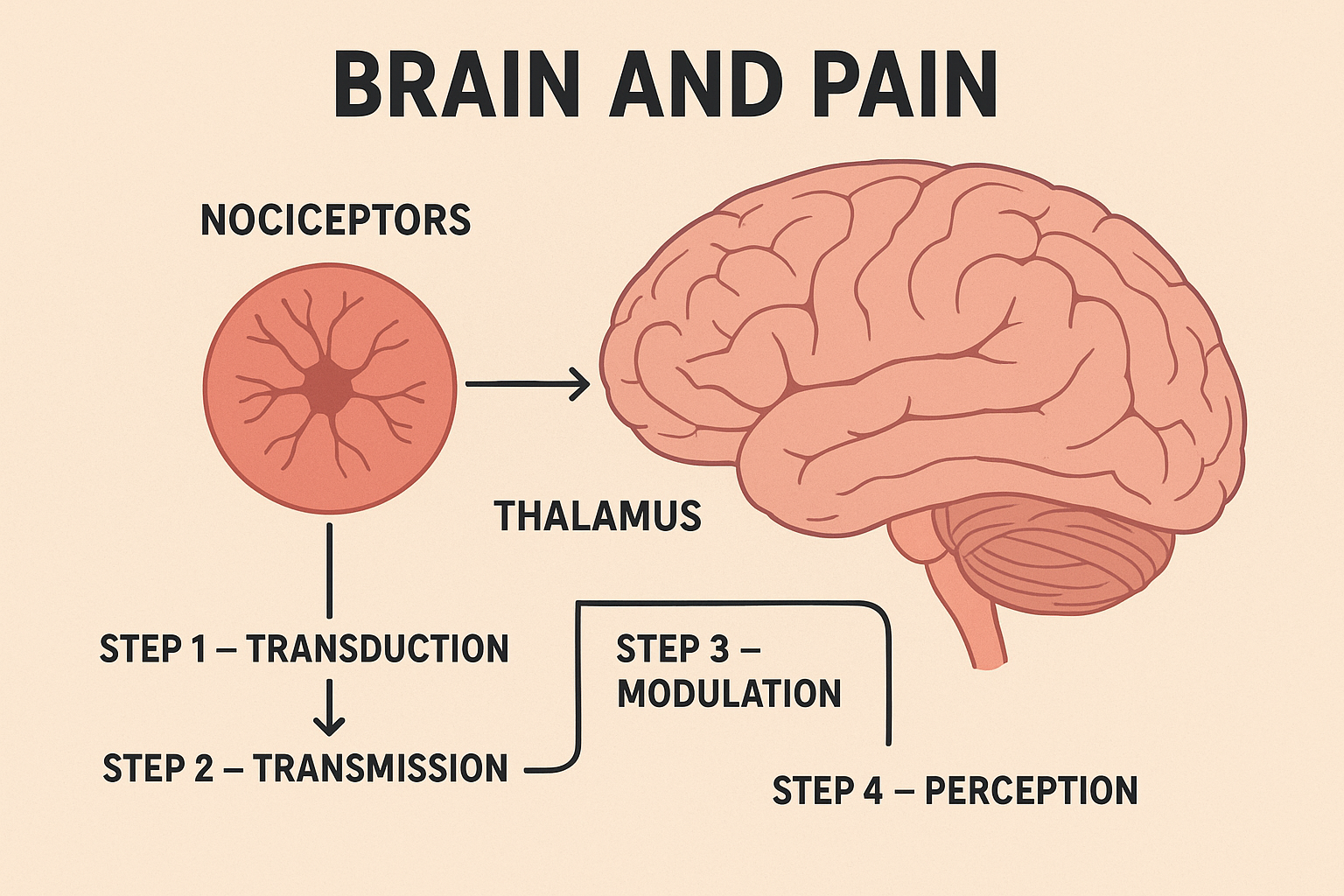
Even though feeling pain is about as basic a human experience as there is, the process by which our brains perceive pain is actually quite complex.
It starts with transduction, where specialized nerve-endings called nociceptors detect harmful stimuli (like a cut, or scrape, or broken bone) and convert them to electrical signals; then comes transmission, which sends the signals to the brain, where they are received and distributed by the thalamus; then comes modulation, where your brain releases neurotransmitters to block or reduce pain before you notice it; and then perception, where three different areas of your brain process the physical, emotional, and mental aspects of what you’re feeling.
So, without a brain, we would feel no pain. But guess what part of your body cannot, itself, experience any pain? That’s right—your brain. In fact, doctors regularly perform brain surgery on patients while they are wide awake. The patient can’t feel a thing, because the brain has no nociceptors. So next time you’re working through a bar-modeling problem and your classmate says, “this is making my brain hurt!” just remember…that can’t be right! Your brain feels no pain.