
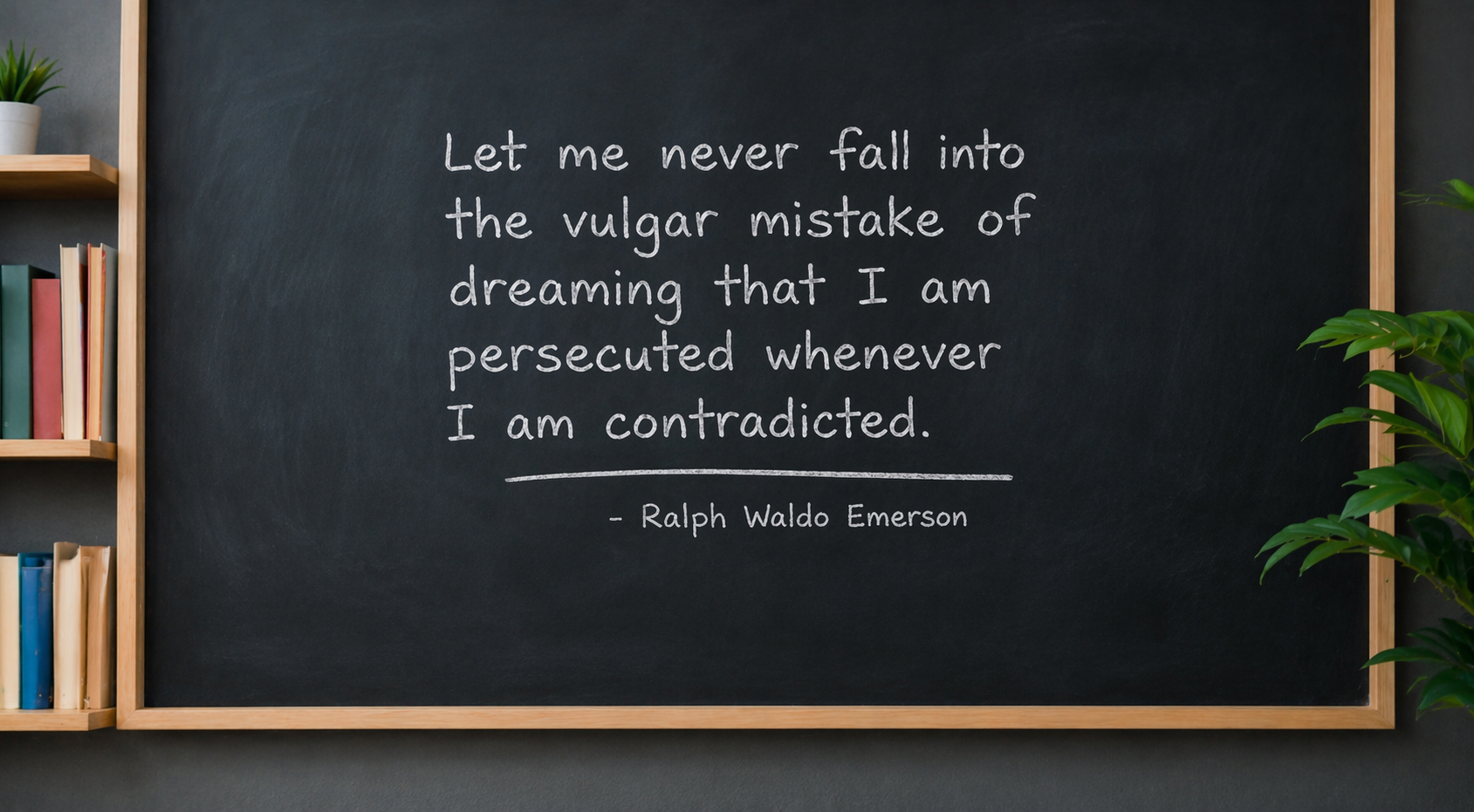
We’ve been considering opinions this week – what it means to have one, how we should think about our own opinions, and so forth. “But,” you may ask, “why does any of this matter? What difference does it make if my opinions are based on my feelings, or if I hold them with certainty rather than circumspection? After all, they’re my opinions. I can do with them what I want.”
Well, Ralph Waldo Emerson offers at least one reason why it matters. He said:
“Let me never fall into the vulgar mistake of dreaming that I am persecuted whenever I am contradicted.”
People who feel rather than think their way to their opinions aren’t just frequently wrong, and they aren’t merely unpersuasive (after all, you can’t convince me to feel the way you do)—such people are actually incapable of disagreement, because expressing an opposing view is a personal insult rather than the start of an illuminating conversation.
Suppose your classmate’s opinion is that foursquare is the best recess game simply because they like it best—but someone declares that tetherball is better, and so the classmate gets offended and runs off in tears. Or suppose that a student feels that their essay is worthy of an A, simply because they put a great deal of time and effort into it. But the teacher tells them that it is C-quality writing at best, so the student concludes that they’re the victim of an unfair grading system, rather than the recipient of valuable, constructive criticism.
People with well-formed opinions don’t mind being contradicted. In fact, they welcome it. But those who let their emotions govern their thinking make the “vulgar mistake” of being victimized by the very thing that could make them better.
Do you know someone like that? Are you someone like that?
Have a wonderful day.