This week, we will begin reflections on our school virtues: the seven classical or heavenly virtues, which consist of prudence, fortitude, justice, temperance (the four cardinal or human virtues), and faith, hope, and charity (the three theological virtues). Perhaps when...
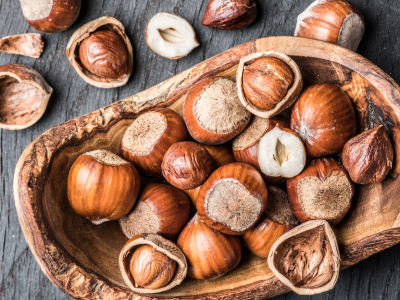
The lesson of the boy who tried to take too many filberts out of the pitcher? “Do not attempt too much at once.” And the riddle of the bus driver who seemed to violate all those driving laws, and yet...
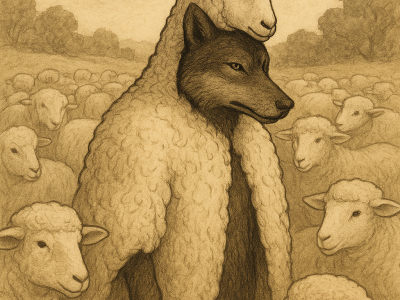
Well, you waited an extra day for the answers from last time, so I won’t make you wait any longer. The lesson from The Wolf in Sheep’s Clothing, according to Aesop, is: “The evil doer often comes to harm through his...
Welcome back – I hope everyone had a nice, long weekend. Next week, each morning I’m going to ask you to think about virtue—and specifically the seven classical virtues that we have posted around the school. What are they, where...
Well, it’s good to be back. Some of you might have noticed that Miss Blackstone and I have been gone for the last three days. If you didn’t notice, well then, so much the better. We were at Hillsdale College,...
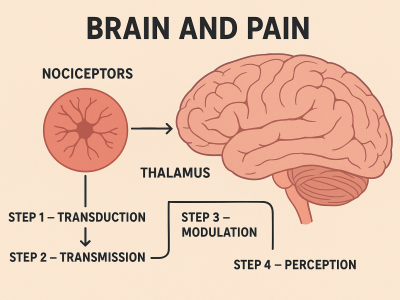
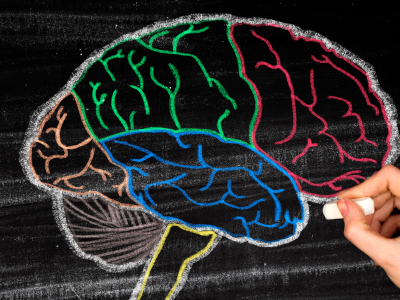
Even though feeling pain is about as basic a human experience as there is, the process by which our brains perceive pain is actually quite complex. It starts with transduction, where specialized nerve-endings called nociceptors detect harmful stimuli (like a...
The human brain is hardwired for music. The rhythms of the brain and body—your neurons firing, your breathing, your heartbeat—are all part of that hardwiring, and they all are activated an engaged when we listen to music. It is why...
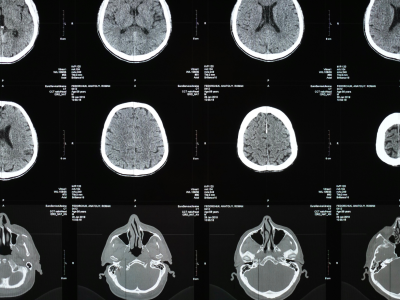
An adult brain weighs approximately 3 pounds and is about the size of a grapefruit. However, beginning in our mid-30’s to mid-40’s, our brains actually begin to get smaller as we age. In addition, the male brain is, on average,...
The human brain contains approximately one hundred billion neurons. That is about the same as the number of stars in the Milky Way galaxy. These neurons are connected by trillions of connections, or synapses. Brain scientists call this a “neuron...
Last week we finished our reflections on the Honor Code. In the coming weeks, we’ll consider our school virtues: what they are, where they come from, why we enumerate them in the first place… But for this week and next,...